
Small handyman jobs cost more than most homeowners expect, and the reason is simple: the work that goes into a “minor repair” is never as minor as it looks. But once you understand how a licensed contractor actually prices jobs, that number starts making a lot more sense.
This article walks through why small jobs carry real costs, what drives handyman rates up even on basic work, and what you should know before you hire a handyman for any project around the house.
Why Small Jobs Are Harder to Price Than You Think
The Minimum Service Fee Exists for a Reason
Most people assume a short job means a small bill.
But a self-employed handyman or licensed contractor has monthly expenses that don’t pause between projects. Insurance premiums, fuel, vehicle maintenance, licensing fees, and tools all cost money, whether the job takes 30 minutes or three hours.
That’s why most handyman businesses charge a minimum service fee or a two-hour minimum. It’s not padding, it’s the floor that keeps a short job from being a net loss.
When you hire a handyman for odd jobs or small tasks, that minimum fee covers the cost of just showing up.
Mobilization Is a Line Item, Not a Luxury
Every trip to a job site costs money. A skilled handyman driving 40 minutes each way to handle a one-hour task is spending nearly half a workday on a single small job. Factor in fuel, drive time, and the wear and tear on a work vehicle, and overhead costs add up fast.
Many handymen price jobs with a flat rate or a flat fee to account for this. Others use hourly pricing with a set minimum. Either way, the mobilization cost is real, and it shows up in every quote for common handyman services, whether the client sees it broken out or not.
What Actually Goes Into the Labor Costs
It’s Not Just the Hours on the Clock
Handyman hourly rates often look high until you realize the hourly rate covers more than hands-on work.
A reliable handyman also spends time on accurate estimates before the job, sourcing materials, coordinating schedules, and conducting a proper walkthrough after the work is done.
For smaller handyman projects, the time spent surrounding the project can easily match or exceed the actual labor hours.
A job that takes 90 minutes of physical work might involve two hours of prep, material sourcing, and cleanup on top of that. The average handyman rates you see online rarely reflect the full picture.
Material Costs Add More Than People Expect
Material costs are another area where the actual numbers surprise people.
A licensed contractor isn’t just buying what they need at retail and charging you the same price. They’re accounting for:
- Time spent sourcing the right materials for your specific job
- Trips back to the supplier when something doesn’t fit or needs to be swapped
- Built-in overage for measured materials to avoid running short mid-job
- The administrative work of tracking, invoicing, and documenting every purchase
Even for minor repairs or basic carpentry work, material costs can make up a significant portion of the final invoice.
Case Study: What a Door Replacement Actually Involves
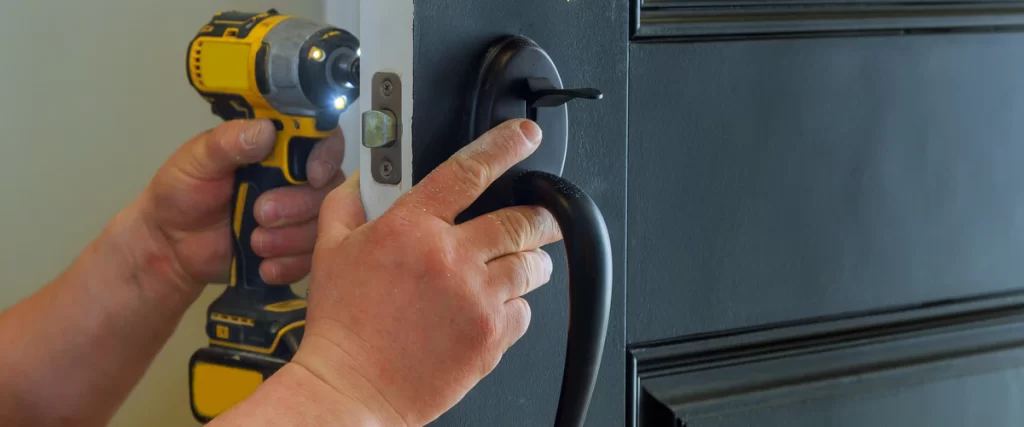
A door replacement looks straightforward from the outside. You take one down, you put another one up. But if you understand what a licensed contractor has to do from start to finish, the time and attention it requires start to make a lot more sense.
Here’s what a standard door replacement actually involves:
- Driving to the job site with the crew and all necessary tools
- Sourcing or purchasing the correct door unit and hardware for that specific opening
- Laying down floor protection before anything gets touched
- Removing the old door without damaging the surrounding frame or trim
- Installing the new door and checking it for plumb and level
- Adding doorknobs, hinges, and weatherstripping
- Caulking, sealing, and doing a final walkthrough
None of those steps is complicated on its own. But each one takes time, and the materials, the prep, and the attention to detail are what separate a door that works properly for years from one that sticks, drafts, or hangs crooked by spring. That’s what you’re paying for when you hire someone who does this right.
Why Many Experienced Contractors Don’t Take Small Jobs
Many licensed, experienced contractors skip minor handyman work entirely. The profit margin on small jobs is too thin once you factor in real operating costs, and a legitimate handyman business simply can’t match what an unlicensed worker charges without losing money.
The California Contractors State License Board requires licensed contractors to carry liability insurance and meet bonding standards that add to overhead. That coverage protects you as the homeowner, and it’s included in every quote.
Licensed contractors like our team at Cornejo’s Builders focus on larger renovation and construction projects where the job complexity and scope actually align with those operating costs.
What Happens When You Go With the Cheapest Option

Hiring the lowest bidder feels smart until something goes wrong. The risks of small jobs tend to show up as:
- Work that fails local inspections
- Materials that don’t meet building code
- No warranty or recourse when the repair fails
- Unexpected costs when the next contractor has to redo the work
If you hire a handyman for general maintenance or minor plumbing and electrical tasks, always request a detailed written estimate. A reliable handyman with solid service history won’t hesitate to provide one.
Anyone who won’t give you as much detail as you ask for is worth being cautious about.
One way to save money on handyman services is to bundle multiple small tasks into a single visit. It spreads the minimum fees across more work, lowers the effective cost per job, and makes the trip worthwhile for both parties.
FAQs About Handyman Jobs Cost
Why do handyman rates vary so much from one contractor to another? Job complexity, location, licensing status, and overhead costs all affect pricing. An experienced handyman with liability insurance and specialized tools will charge more than someone who works without those, and for good reason.
What’s a realistic average handyman cost for minor repairs? Most small jobs run between $150 and $400 once you factor in minimum fees and material costs. More complex projects with electrical work, plumbing work, or specialty tools scale from there.
Is flat rate pricing better than hourly pricing? It depends on the job. Flat rate pricing gives you cost certainty upfront, which works well for straightforward handyman projects. Hourly pricing can be better for jobs where the scope isn’t fully clear at the start.
How can I get more accurate estimates? Give the contractor as much detail as possible before they quote. Photos, measurements, and a clear description of the specific job help them price it correctly the first time and avoid unexpected costs later.
Can I save money by scheduling at off-peak times? Sometimes. Some handyman businesses offer better availability and competitive pricing during slower seasons. It’s worth asking, especially for non-urgent maintenance jobs.
Why do small jobs sometimes cost nearly as much as medium jobs? Because the minimum service fee, mobilization, and setup costs are largely fixed. The actual hands-on labor is often the smallest part of what drives the handyman cost on a short job.
Ready for Something Bigger?
If you’ve gotten this far, you now understand why the handyman jobs cost conversation is more layered than it looks. Labor costs, material costs, liability insurance, minimum fees, overhead, it all goes into the number.
Small handyman work has its place, and the right person for those jobs is someone whose handyman business is built around them. But if what’s on your list goes beyond minor repairs, a remodel, an addition, a full build, that’s a different conversation entirely.
When you’re ready for a project with real scope, call us at (562) 319-3178 or message us here. That’s where we can actually do our best work for you.