
For most homeowners weighing an ADU vs a new home, the answer comes down to one uncomfortable truth: the housing market isn’t offering much to move for right now.
Inventory is thin, prices are high, and the homes available often need just as much work as the one you’re already in. Before you call a real estate agent, it’s worth understanding what building an ADU on your existing property could do for your finances and your family.
This article covers costs, rental income potential, zoning laws, and everything in between, so you can make an informed decision.
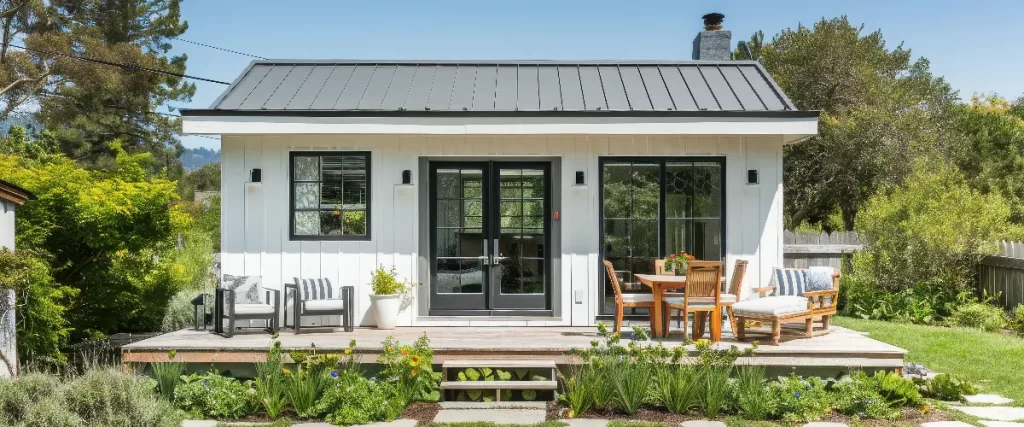
ADU vs New Home: Side-by-Side
| Build an ADU | Buy a New Home | |
| Upfront Cost | $200K–$450K+ in SoCal | Down payment + closing costs + moving |
| Rental Income | Significant passive income potential | Only as a separate investment property |
| Property Value | Increases resale value | Depends on the new property condition |
| Disruption | Construction period on the same property | Full relocation |
| Zoning | Local zoning laws and permit requirements apply | Subject to local regulations |
| Financing Options | HELOC, cash out refinance, construction loans | Traditional mortgage, new down payment |
Why So Many Homeowners Are Staying Put
The market’s inventory is rough right now.
Most people would rather invest in an existing home they already have, build an ADU, and have the rental income pay down the mortgage. That’s the math playing out in neighborhoods across San Diego County and other high-demand urban areas.
Every time you buy a house, it’s likely you’re going to remodel it anyway. You might as well spend it turning the home you already have into something you can see yourself living in the long term.
What Is an Accessory Dwelling Unit (or Granny Flat)?
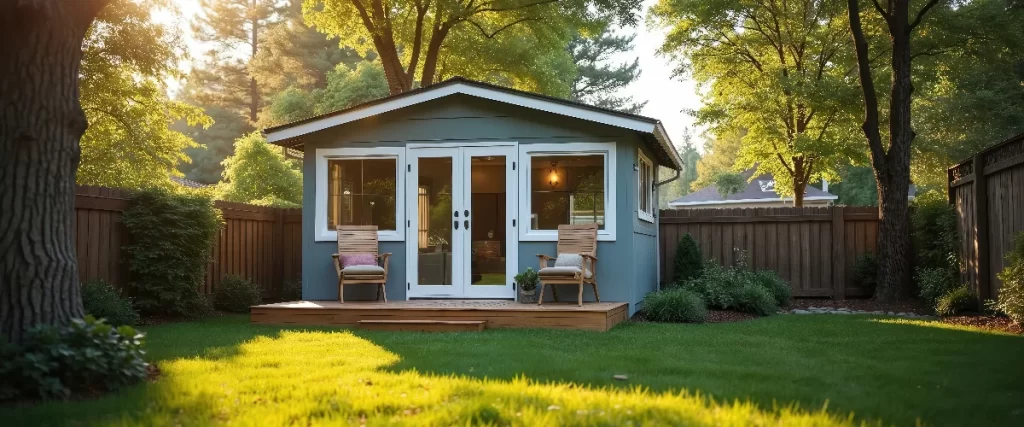
An accessory dwelling unit is a secondary living space built on the same property as a primary residence. It goes by various names: granny flat, in-law suite, guest house, backyard cottage, carriage house.
They can be detached units built in the yard, conversions of an existing structure, such as a garage, or additions attached to the main house.
The appeal is simple: you add extra living space, generate rental income, and stay in a neighborhood you’ve already chosen, all without buying a new property.
Build an ADU and Generate Rental Income
A detached ADU rented out as a rental unit can generate enough extra income to cover a meaningful portion of your mortgage payments, sometimes all of them.
You’re essentially turning a single-family home into an investment property without leaving your primary residence. That’s a move that pays off in two ways: rental income now, and stronger resale value later.
Financing Options: Cash Out Refinance, HELOCs, and More
Financing an ADU project has become more accessible over the years. Options include:
- Cash out refinance on your existing home
- Home equity line of credit (HELOC)
- Construction loans tied to the projected value of the property
- State and local programs are worth investigating before you start
The California Housing Finance Agency (CalHFA) has previously offered ADU Grant Programs that provide up to $40,000 toward predevelopment costs such as permits, architectural designs, and soil tests. Funding availability changes, so check with CalHFA directly for current programs.
Why Families Add an ADU for Affordable Housing
A couple buys a two-bedroom home, ends up with three or four kids, and suddenly needs more square footage.
However, local zoning laws limit how much you can add before you start losing yard space. More rooms without yards aren’t always the right answer, especially when kids are involved.
Deciding to add an ADU often solves this better than a traditional home addition. Aging parents move into the guest house. Adult children get affordable housing without paying city rents. The main house keeps its existing living space and yard.
It’s a flexible living space that can serve different purposes as long-term plans evolve, and it avoids the cost and disruption of buying a separate property entirely.
Zoning Laws and Building Codes: What to Know
Building an ADU isn’t just a construction project. It’s a regulatory one too. Local zoning laws govern square footage limits, setbacks from property lines, whether detached units or attached additions are permitted, and parking requirements.
California has removed several of the biggest state-level barriers since 2016, passing multiple rounds of ADU-friendly legislation that eliminated minimum lot size requirements, streamlined permit timelines, and permanently abolished owner-occupancy requirements in 2023.
That said, permit requirements still vary by parcel, which is part of why builders like Cornejo’s Builders stay current on what’s allowed across Southern California jurisdictions.
How an ADU Affects Property Value

Homes with ADUs tend to sell for 20–35% more than comparable homes without one, based on national and California-specific data.
A 2025 Federal Housing Finance Agency study found that properties with ADUs are appreciated 22% more over a decade than those without. In competitive markets like San Diego County, the premium runs even higher.
Potential buyers see an ADU as a rental unit that generates extra income, additional living space for family members, or a flexible setup they can adapt over time.
That combination makes a home more marketable and supports a stronger resale value than a standard room addition alone.
When Buying a New Property Makes More Sense
There are situations where moving is the right call:
- Your lot has no room for additional living space
- Local regulations make an ADU project unfeasible
- You need to relocate for work or personal reasons
- The existing home has problems that no renovation can fix
The Real Cost: Down Payment, Closing Costs, and Starting Over
If buying is your path, go in with clear eyes on the numbers.
Down payments range from as low as 3% on a conventional loan to 3.5% on an FHA loan, with the national median sitting around 15% of the purchase price.
Add 2–5% in closing costs, moving expenses, and whatever the new property needs once you’re in, and the cost gap between building and buying closes faster than most people expect.
FAQ
Is an ADU cost-effective compared to buying a new home in Southern California?
For most homeowners with adequate yard space, yes. The ability to generate rental income offsets a significant portion of the construction cost over time.
What’s a realistic ADU cost in San Diego County?
A turnkey detached ADU in Southern California typically runs $200,000–$450,000 or more. Garage conversions and attached units come in lower; fully detached new builds with separate utilities push higher. National figures citing $100,000–$300,000 don’t reflect California’s construction costs.
Can ADU rental income help me qualify for financing?
In some cases, yes. FHA updated its guidelines to allow rental income from an ADU to count toward qualifying income. A lender familiar with ADU financing can walk you through current eligibility.
What types of ADUs are there?
The main types are detached ADUs, attached ADUs, garage conversions, and junior ADUs carved out of the existing square footage of the main house. Each carries different costs, permit requirements, and rental income potential.
Does adding an ADU affect property taxes?
Yes. Adding an ADU typically triggers a reassessment of the new portion of the property. Under California’s Proposition 13, the primary residence assessment is generally not affected, but the new unit will be assessed at its added value.
The Bottom Line on ADU vs New Home
If you run the real numbers on ADU vs new home, staying and building usually wins for homeowners who have the space and a property that supports it.
The market isn’t handing out dream homes at reasonable prices right now, and the cost of moving and starting over rarely pencils out better than investing in a property you already own.
The team at Cornejo’s Builders has helped Southern California homeowners navigate ADU projects from zoning questions to final build. If you’d like to talk through what’s possible on your property, call us at (562) 319-3178 or message us here.