
If you live in Southern California, you already know fire is a real threat that rolls through neighborhoods fast and without much warning.
Choosing the right fire-resistant building materials when you build or renovate could be the difference between losing your home and watching it survive while others around it don’t.
Below are 10 of the best fire-resistant materials worth knowing about, along with practical guidance on where each fits best.
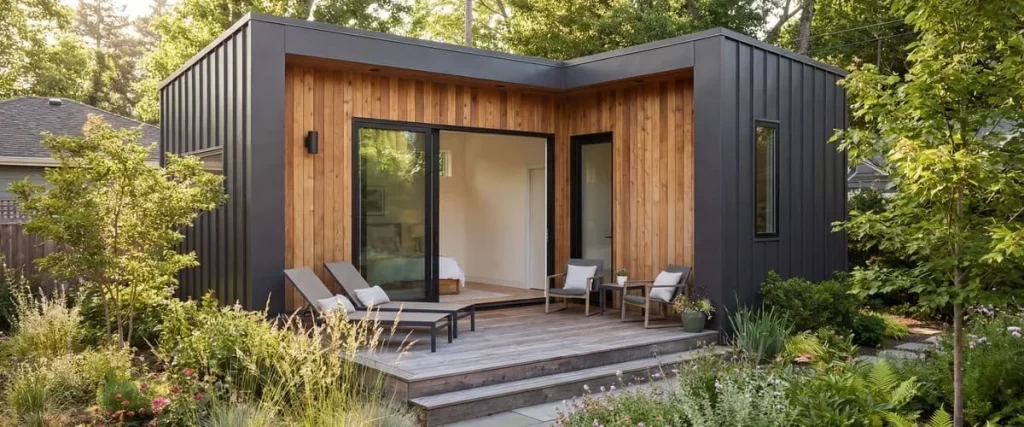
1. Concrete
Concrete is as close to fireproof as residential construction gets. It’s non-combustible, transfers heat slowly, and holds its structure even under intense heat.
You can use it for walls, floors, and roofing systems. FEMA’s wildfire home resilience guidance specifically calls out concrete as a key material in wildfire-prone areas, and real-world cases back that up.
2. Brick
Brick is fired at high temperatures during manufacturing, which means it can handle extreme heat on your exterior walls without cracking or losing structural integrity.
It’s been used in fire-resistant construction for centuries for good reason. Beyond fire protection, brick is highly durable and requires very little maintenance over time.
3. Gypsum Board (Type X Drywall)
Standard half-inch drywall carries a 30-minute fire rating. Type X gypsum board, which is 5/8 inch thick and reinforced with glass fibers, offers significantly more protection.
When exposed to heat, the chemically bound water in gypsum releases and absorbs heat, slowing the temperature rise on the other side of the wall. It’s the go-to interior lining in fire-rated assemblies for a reason.
4. Mineral Wool Insulation
Mineral wool (also called rock wool or stone wool) can resist temperatures above 1,000°C (1,832°F) without burning or melting. Unlike fiberglass insulation, which is fire-resistant but not fire-rated on its own, mineral wool is fully non-combustible.
It also delivers strong thermal and acoustic performance, with R-values typically ranging from R-3.0 to R-4.2 per inch, depending on the product and density. It’s a smart choice for wildland-urban interface zones.
5. Fiber Cement Siding
Fiber cement is a blend of cement, sand, and cellulose fibers. It won’t ignite, it won’t emit toxic fumes in a fire, and it holds up against embers landing on exterior walls.
It’s one of the most recommended exterior cladding materials for fire-prone climates by building science professionals. The Building America Solution Center lists fiber cement as a non-combustible siding option alongside brick, stone, and stucco.
6. Stone and Natural Masonry
Stone is naturally non-combustible and extremely durable. It’s used on exterior walls, chimneys, and landscaping features that need to withstand both fire exposure and the test of time.
One thing worth noting: stacked stone without mortar can shift during high heat or seismic events, so it should always be properly mortared and ideally reinforced.
7. Steel Framing
Wood framing is combustible. Steel framing is not.
Steel frames won’t feed a fire, though they do lose structural strength at very high temperatures, which is why they’re often paired with spray-on fireproofing or gypsum board wrapping.
For new home construction in Southern California, steel framing is worth a serious look, especially in areas with high wildfire risk ratings.
8. Tempered Glass and Multi-Pane Windows
Windows are one of the most overlooked vulnerabilities in fire-resistant construction. Standard glass can crack and break under radiant heat, allowing flames and embers to enter the structure.
Tempered glass resists fracture at temperatures well above the radiant heat needed to ignite wood framing. Multi-pane windows add another layer of protection by slowing heat transfer.
Fire-rated glass goes even further, holding back both flames and smoke for rated time periods.
9. Stucco (Portland Cement Plaster)
Stucco is a cement-based exterior plaster applied in multiple layers and serves as a tight, non-combustible skin over a wall assembly. It seals out embers, resists ignition, and has been repeatedly validated as an effective fire-resistant exterior finish.
California homeowners who have survived wildfires frequently credit stucco exteriors for helping keep their homes standing.
10. Fire Retardant Treated Wood
Not all wood is created equal when it comes to fire.
FRT wood is infused with fire-retardant chemicals through a pressure-impregnation process. It carries a measurable flame spread index and meets building code requirements for fire-sensitive applications.
It’s not a replacement for non-combustible materials in high-risk zones, but when wood is required structurally or aesthetically, treated wood is the right call.
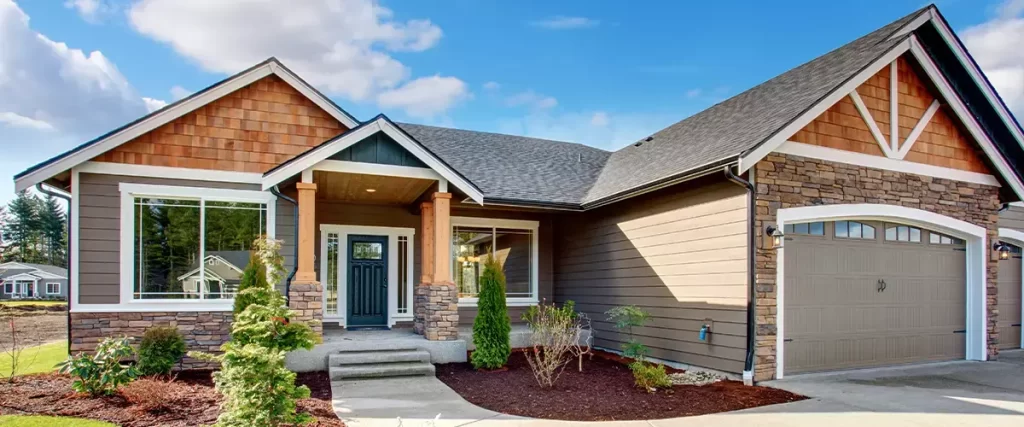
Quick Comparison of Fire-Resistant Building Materials
| Material | Best For | Fire Resistance Level |
| Concrete | Walls, floors, roofs | Excellent |
| Brick | Exterior walls, chimneys | Excellent |
| Type X Gypsum Board | Interior walls, ceilings | Very Good |
| Mineral Wool | Insulation (cavity/rigid) | Excellent |
| Fiber Cement Siding | Exterior cladding | Very Good |
| Natural Stone | Exterior walls, chimneys | Excellent |
| Steel Framing | Structural framing | Good (with protection) |
| Tempered / Fire-Rated Glass | Windows, exterior features | Good to Very Good |
| Stucco | Exterior cladding | Very Good |
| Fire Retardant Treated Wood | Framing, decking, trim | Moderate to Good |
Where Most Homeowners Go Wrong with Fire-Resistant Construction
The biggest mistake is treating fire resistance as an afterthought.
Picking one or two fire-resistant building materials while leaving vulnerabilities elsewhere in the envelope, like vinyl siding, unprotected vents, or standard single-pane windows, undermines the whole system.
The other common oversight is skipping the roof. A Class A fire-rated roof covering (concrete tile, metal, or fire-rated asphalt) is one of the highest-impact choices you can make. Remember: embers land on roofs first.
Fire-Resistant Building Materials FAQ
What is the most fire-resistant building material for exterior walls?
Concrete, brick, and stone are the top performers. Fiber cement siding and stucco are excellent alternatives that offer non-combustible protection and greater design flexibility.
Is fiber cement siding actually fire-resistant?
Yes. Fiber cement is a cement-based product that won’t ignite, doesn’t contribute to flame spread, and doesn’t emit toxic fumes when exposed to heat. It’s widely used in California’s high fire hazard severity zones.
What type of insulation is best for fire resistance?
Mineral wool (rock wool or stone wool) is the strongest choice. It’s fully non-combustible and can resist temperatures above 1,800°F. Fiberglass is fire-resistant but not rated as fireproof on its own.
Does fire retardant treated wood make wood safe in a wildfire?
It improves performance significantly compared to untreated wood, but it doesn’t make wood non-combustible. In very high-risk zones, non-combustible framing materials like concrete block or steel are a better structural choice.
What windows hold up best in a fire?
Tempered glass is the minimum recommendation. Multi-pane tempered windows add more protection. For high-risk areas or fire-rated wall assemblies, fire-rated glass units that have been specifically tested for flame and heat resistance are the strongest option.
Do fire-resistant materials cost a lot more?
Not always. Concrete and stucco are often comparable in cost to standard frame-and-siding construction. Mineral wool costs more than fiberglass, but not by much. Type X gypsum board is a minor upgrade over standard drywall. The real value is what you avoid paying after a fire.
What does “fire resistance rating” mean?
It’s the amount of time, measured in minutes or hours, that a building assembly can withstand a standardized fire exposure before failing. Assemblies are tested according to protocols such as ASTM E119. A 1-hour rating means the assembly held for at least 60 minutes under those conditions.
The Bottom Line
Knowing what fire-resistant building materials exist is one thing. Knowing how to combine them into a wall assembly, a roof system, or a complete home that actually performs under fire conditions is another conversation entirely.
If you’re planning a new home build in Southern California, working with a builder who understands how these systems fit together will save you more headaches, money, and risk than trying to sort it out on your own.
The team at Cornejos Builders handles everything from planning and permitting to material selection and construction, backed with a 1-year workmanship warranty.
If you’d rather skip the research and just build it right the first time, call us at (562) 319-3178 or message us here.