Your foundation isn’t something you think about every day until you’re building a new home. Suddenly, it feels like the most important decision. If you’re planning construction in Orange County, you’ve probably heard contractors throw around terms like “monolithic slab” and “stem wall foundation,” as if everyone knows what they mean.
Choosing between a monolithic slab vs stem wall affects everything from your budget to how long construction takes to whether your floors stay level for decades. And if you pick the wrong one for your property? You’re looking at drainage issues, cracking, and repair bills that’ll make you wish you’d done more homework.
Monolithic Slab vs Stem Wall: A Quick Comparison
| Feature | Monolithic Slab | Stem Wall |
| Construction Method | Single pour | Multi-step process |
| Height Above Ground | At or slightly above grade | Elevated several inches to feet |
| Time to Build | 1-2 days | 3-5 days or more |
| Typical Cost | $4-$8 per sq ft | $6-$12 per sq ft |
| Best For | Flat, stable sites | Uneven terrain, hillsides |
Understanding the Two Foundation Types
A monolithic slab is exactly what it sounds like: one massive pour of concrete that creates your foundation and floor in a single step. The footings, floor slab, and perimeter walls all get poured at once, forming a thick edge around the outside with a thinner slab in the middle.
Stem wall foundations work differently. They use a two-step process where footings get poured first, then block or concrete walls rise to create a perimeter, and finally, the slab gets poured inside that frame.
The Main Difference Between Monolithic and Stem Wall Foundations
The biggest difference isn’t just how they’re built, it’s how they sit on your land.
Monolithic slabs stay close to ground level. They need a properly compacted building site with very little fill dirt required. You prep the area, set your forms, and pour everything in one shot. This makes them faster and cheaper when your property is already relatively flat and stable.
Stem wall foundations raise your home off the ground. Those perimeter walls can range from a few inches to several feet tall, depending on what your site needs. This elevation helps with drainage, gives you easy access to plumbing under the slab, and works better on uneven terrain.
If your building site has slopes or needs significant grading, stem walls give builders more flexibility. They can adjust the height of different sections to create a level finished slab elevation without moving mountains of dirt around.
Monolithic Slab Foundation: Pros and Cons
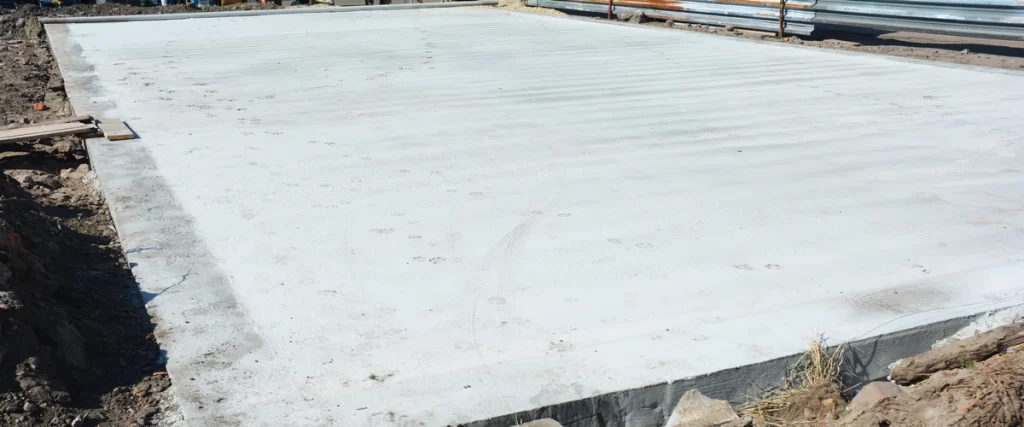
The Pros of Monolithic Slab
- Faster construction timeline. Your crew shows up, does the prep work, and pours the whole thing in one day.
- Lower labor costs. You’re not paying people to come back multiple times for different stages of construction.
- Ideal for stable, level ground. These foundations work great on soil that’s already close to level and properly compacted.
- Fewer structural weak points. The one-pour method creates better long-term stability when conditions are right, since there are no joints between foundation sections.
The Cons of Monolithic Slab
- Vulnerable to soil movement. If the compacted fill dirt underneath shifts or settles unevenly, your entire floor goes with it.
- Higher risk of cracking. The ground needs perfect preparation, and expansive clay soils common throughout Southern California can cause serious problems.
- Limited elevation control. If your lot has drainage issues or sits in a low-lying area, that slab at grade level could become a problem during heavy winter rains.
- Difficult plumbing repairs. Everything’s buried in concrete with no access from below, turning simple fixes into expensive nightmares.
- Poor choice for slopes. In hillside areas, you’re fighting gravity, which makes monolithic slabs impractical for anything but the flattest lots.
Stem Wall Foundation: Pros and Cons
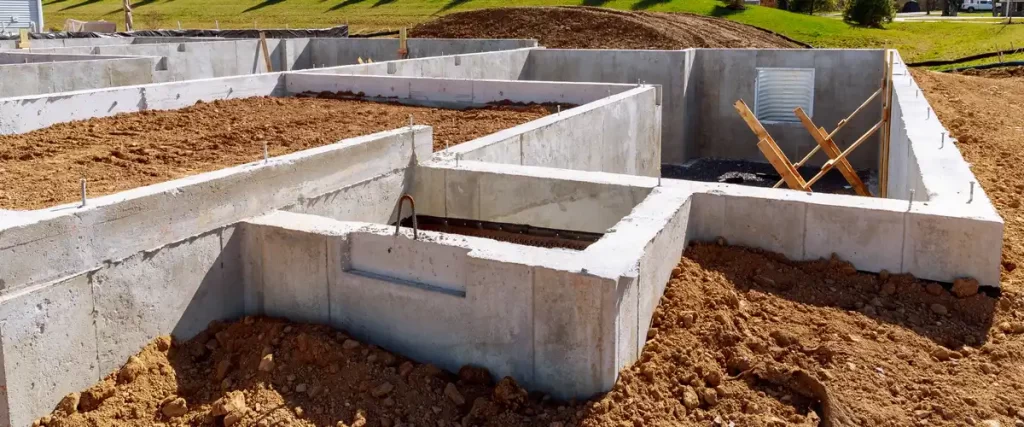
The Pros of Stem Wall
- Better for challenging sites. Stem walls handle slopes, soft spots, and drainage issues that would make monolithic slabs impractical.
- Flexible height adjustments. You can adjust different sections to create a level foundation even when your lot isn’t cooperating.
- Easier access for repairs. The space between the ground and your floor slab means plumbers can access lines without jackhammering through your living room.
- Better moisture control. Air circulation under the house helps prevent dampness and related problems.
- Superior water protection. Having your floor elevated several inches or feet higher creates a buffer zone against runoff during storms or drainage from uphill properties.
- Enhanced seismic engineering options. In Los Angeles and Orange County, stem walls can be reinforced to meet strict California Building Code requirements with more design flexibility.
The Cons of Stem Wall
- Higher labor costs. You need footings poured, then you wait. Walls go up, then you wait. Finally the slab gets poured.
- More coordination required. Each step needs scheduling, and any delays ripple through your entire construction timeline.
- Increased material expenses. You’re using more concrete and adding blocks or forms for those perimeter walls.
- Longer construction schedule. The multi-step building process affects your overall project timeline and potentially increases financing costs if you’re paying construction interest.
Cost Comparison: What You’ll Actually Pay
Money talks, and foundation costs can make or break your building budget:
- Monolithic slabs typically run between $4 and $8 per square foot installed. A 2,000-square-foot house? You’re looking at $8,000 to $16,000 for the foundation work.
- Stem walls cost more, usually $6 to $12 per square foot. That same 2,000-square-foot house jumps to $12,000 to $24,000. You’re more likely to get the higher end of the quote if you’re working with challenging soil conditions.
Remember: the cheapest foundation isn’t the right foundation. If a monolithic slab cracks because your soil wasn’t suitable, those repair costs dwarf any upfront savings.
Picking the Right Foundation for Your Project
Location drives this decision more than personal preference.
Los Angeles and Orange County present unique challenges with varied terrain, clay soils, and hillside lots. While flat properties in areas like Irvine or parts of the Valley might work fine with monolithic slabs, most of Southern California’s residential lots benefit from stem wall construction.
If your property has any of these characteristics, stem walls make more sense:
- Noticeable slopes or hillside location
- Expansive clay soils that swell and shrink
- Uphill drainage flowing toward your lot
- Need for seismic reinforcement beyond basic code
- Under-slab utility access requirements
Your builder should test the soil and evaluate drainage before making this call. A home builder experienced in your area knows which foundation type holds up best in local conditions. The California Geological Survey provides soil maps and seismic hazard information that can help determine the right foundation approach for your specific lot.

Common Questions About Monolithic Slab vs Stem Wall
How long does each foundation type last?
Both can last 50+ years when properly constructed on suitable soil. The key is to match the foundation to your site’s specific conditions.
Can you add on to a house with a monolithic slab?
Yes, but it’s trickier than with stem walls. Creating control joints between old and new concrete helps prevent cracking where sections meet.
Which foundation is better for resale value?
Buyers care more about whether the foundation is appropriate for the lot than which specific type you chose. A well-built stem wall beats a cracked monolithic slab every time.
Do stem walls require more maintenance?
Not really. Both need proper drainage and periodic inspection for cracks. The main difference is easier access for repairs with stem walls.
Can you convert a monolithic slab to a stem wall later?
No. Your foundation choice is permanent. That’s why getting it right the first time matters so much.
Let the Experts Handle It
Look, we’ve thrown a lot at you. Soil compaction, elevation changes, seismic requirements, drainage patterns… It’s enough to make your head spin. And honestly? This isn’t something you want to figure out through trial and error when your life savings are on the line.
The smart move is to work with professionals who’ve poured hundreds of foundations in Los Angeles and Orange County and know exactly which type works best for your specific property. We’ll test your soil, check the grades, review local building codes, and give you a straight answer about what your lot actually needs.
Ready to build on solid ground? Call us at (562) 319-3178 or message us here, and let’s talk about your foundation options. We’ll walk your property, answer your questions, and make sure you’re building the proper foundation for the right conditions.